Back
Powersports F&I Menu: Why Dealers Are Losing Revenue
By Zac Jones, Head of Sales, One Dealer Lane • 9-minute read
September 17, 2026
Share:
Direct Answer
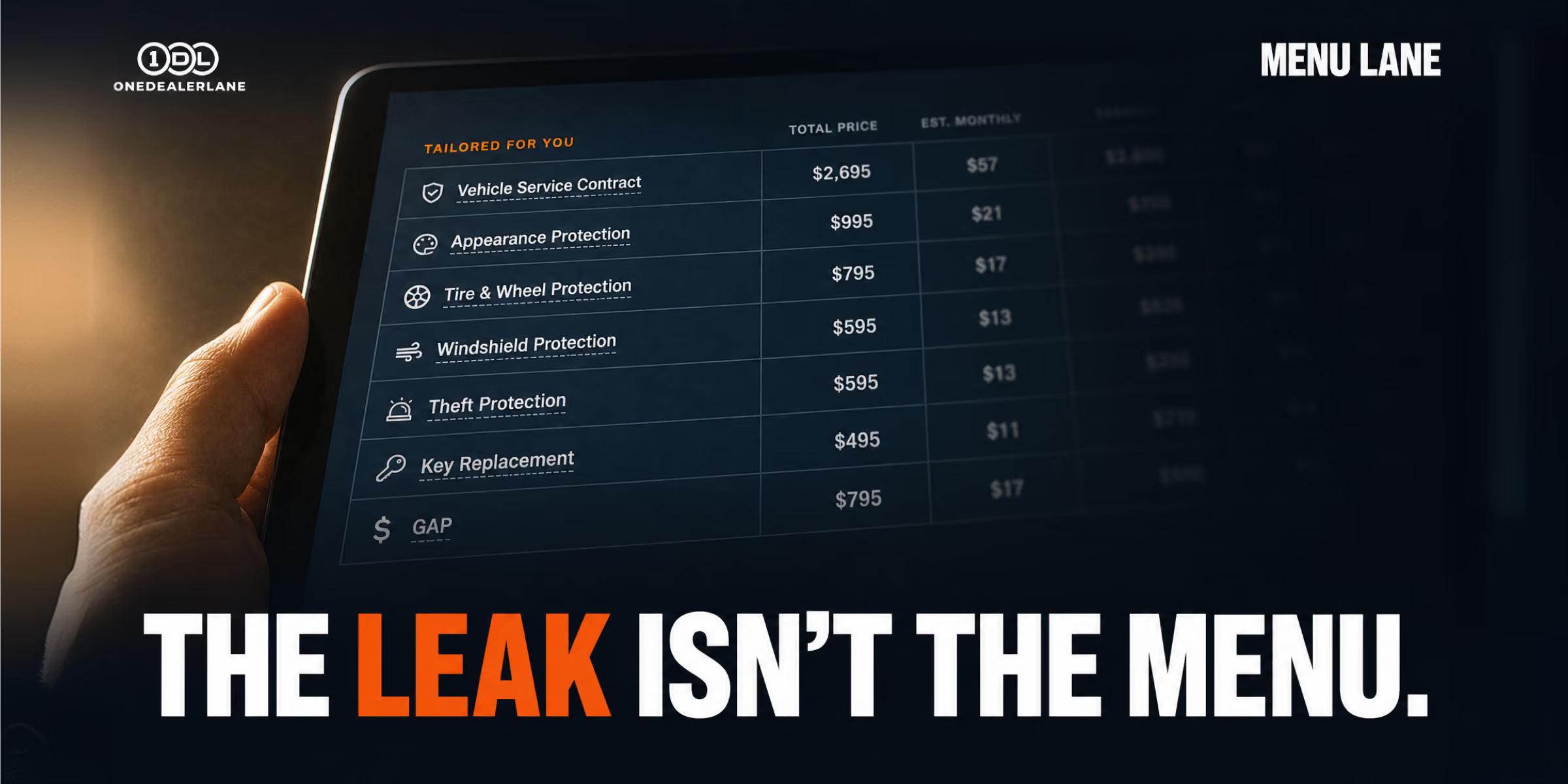
Powersports dealers are losing F&I revenue less because their menu tool is bad and more because the menu runs disconnected from the deal that feeds it — a product gets left off, a term the lender never approved gets presented anyway, or nobody circles back once a longer, thinner loan changes what the customer actually needs covered. Fix the handoff into the menu, and the menu itself usually works fine.
The Number That Should Worry Every F&I Manager
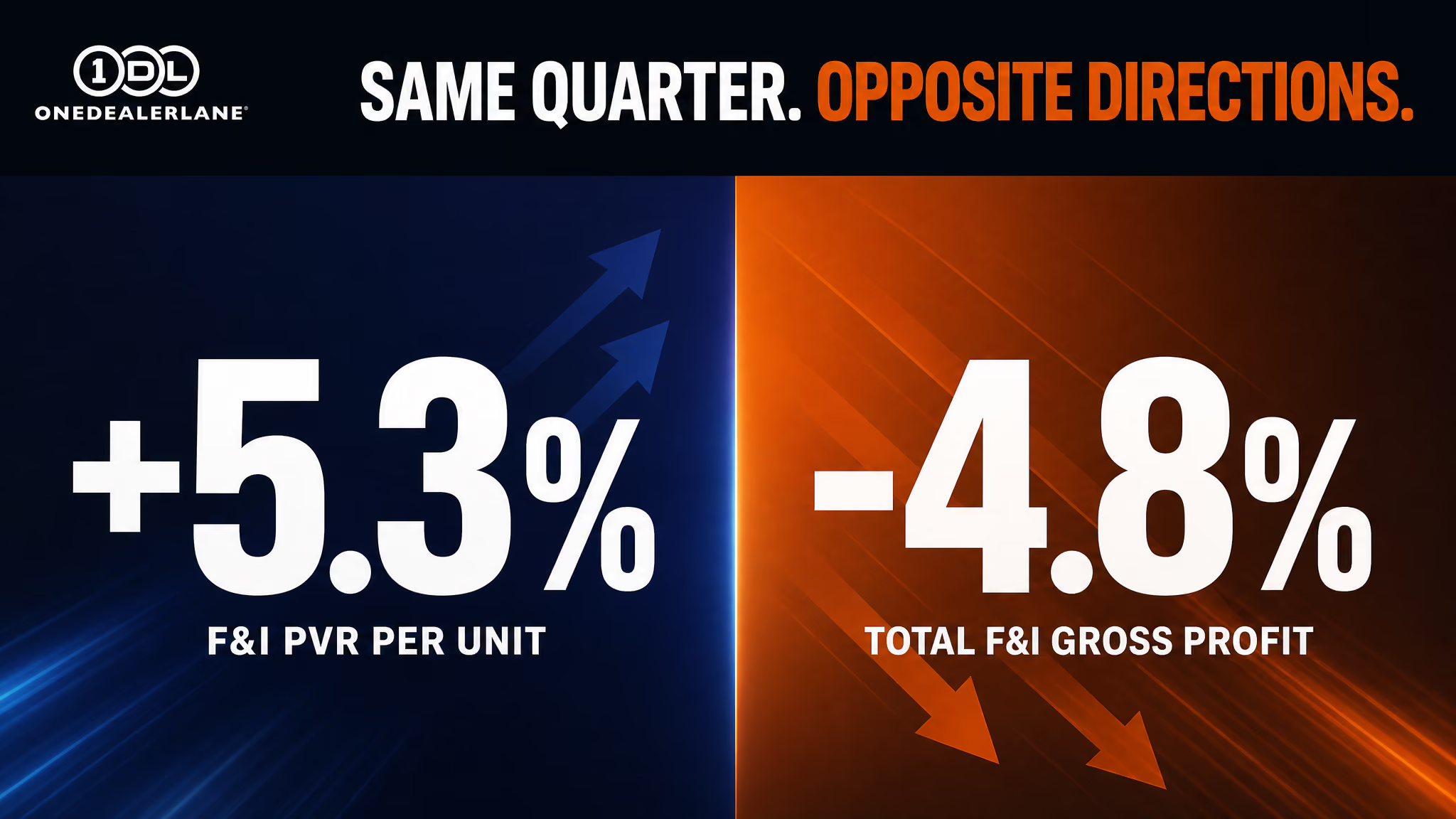
Asbury Automotive Group and Penske Automotive Group reported second-quarter 2026 earnings on the same day — July 28 — and their F&I numbers moved in opposite directions. Asbury's same-store finance and insurance profit per vehicle retailed rose 5.3% year over year to $2,214. Penske's same-store F&I PVR fell 3.8% to $1,815.
On its own, Asbury's number looks like a win. It isn't the whole story. Asbury's same-store F&I gross profit — the total dollars, not the per-unit average — actually fell 4.8% to $150 million in the same quarter, because same-store new-vehicle sales dropped 6.5% and used-vehicle sales fell 13.6%. The PVR climbed because Asbury sold fewer units, and it protected the F&I dollars on each one; total F&I revenue still fell because there were fewer units to sell it on.
That's the trap in a single-number scorecard. A rising PVR feels like the menu is working. It only proves the menu worked on the deals where someone actually presented it, priced it correctly, and didn't skip a product because the desk didn't flag it as eligible. When volume drops, the dealerships that keep total F&I gross from falling further are the ones defending PVR on every single deal — not just the ones where the customer asked for it.
The Loan Is Getting Longer. The Term Sheet Isn't Getting Smarter.
Auto Finance News reported on Aug. 7, 2026, that Octane closed its third and largest securitization backed by RV and marine loans, issued through its in-house lender Roadrunner Financial. According to the S&P Global presale report on the deal, credit quality in the pool improved from Octane's 2025 issuance — weighted-average FICO rose to 711 from 692, and the weighted-average APR fell to 12.69% from 13.98%. But two other numbers moved the opposite way: the weighted-average original loan term stretched to roughly 14.8 years, up from 13.8, and the weighted-average loan-to-value ratio rose to 107.94%, up from 106.75%.
Longer terms and LTVs already above 100% mean more units spend more of their ownership life financed for more than they're worth. That's exactly the exposure GAP coverage, tire-and-wheel, and extended service contracts exist to cover — and it's getting more relevant, not less, even as the borrowers themselves look more creditworthy on paper. A menu built around "add GAP if the customer seems worried about it" is underselling the real math working against a 15-year note at 108% LTV. The product isn't optional friction on this paper — it's the closest thing to real protection either party has.
Marine Just Showed What Happens When F&I Has to Do More With Less
MarineMax's fiscal second-quarter revenue fell 16.5% year over year to $527.4 million, Auto Finance News reported, as continued pressure on boat demand outweighed the company's higher-margin businesses — finance and insurance among them. F&I and product mix helped cushion the decline. They didn't erase it.
That's the pattern across the industry right now, not just at MarineMax: Cox Automotive's Q2 2026 Dealer Sentiment Index put the dealer profitability index at 36 — up only modestly from 32 in Q1, and still well below the 50-point threshold that separates weak conditions from strong ones — while the cost index climbed to 74, its highest level in more than a year. Dealers are being squeezed from both directions: softer unit demand on one side, rising costs on the other. F&I is one of the only levers a store fully controls in that squeeze. It only works as a lever if it's pulled the same way on every deal, not treated as a bonus round when a customer happens to ask good questions.
Where the Revenue Actually Leaks
None of this is really an argument that powersports dealers have bad F&I menu software. Most of the well-known tools — Darwin Automotive, iTapMenu, ImpactMenu from The Impact Group, MenuSys — do the job they were built to do: present products, pull rates, and generate a compliant menu on a tablet, desktop, or paper printout. iTapMenu, for example, has built in a live video-presentation feature (FandEye) aimed specifically at remote delivery, and product-rating connectivity through the Provider Exchange Network. ImpactMenu leans on an Ownership Needs Evaluation framework designed to make the products feel relevant rather than bolted on. MenuSys markets direct e-contracting and rating across more than 120 providers, with RV, powersports, and marine dealers as a named focus alongside traditional auto.
The revenue leak most stores actually have doesn't live inside any of those tools. It lives in the seam before the menu ever opens: whether the vehicle desked matches the vehicle approved, whether the lender's actual terms (not the terms the salesperson assumed) show up on the menu screen, and whether a declined product gets a documented decline or just quietly disappears from the conversation. A standalone menu tool built for a single moment in the deal has no way to catch a mismatch that happened one step earlier at the desk, or one step later at the lender. It can only present what it's handed.
That's a structural problem, not a software-quality problem — and it shows up the same way regardless of which menu tool a store is running: a product the lender requires gets left off because the desk didn't flag the loan-to-value; a customer never sees a menu at all because the deal was built outside the tool and delivered as a fait accompli; or the menu presents last month's rate sheet because nobody re-pulled it after the term stretched from 13.8 years to 14.8.
Where each layer of the deal typically breaks down
Where This Fits Inside the Desk
Inside Menu Lane, the menu doesn't open as its own island. It opens already knowing the vehicle, the trade, and the lender's actual approved terms, because that information already lives in the same connected workflow as Sales Lane and Quick Lane — not copied over from a separate screen or a printed approval sheet. When the loan-to-value or term on a specific deal crosses a threshold a store defines, the menu can prioritize the products that address that specific exposure instead of presenting one-size-fits-all.
Menu Lane isn't trying to replace what a store already does well with Darwin, iTapMenu, ImpactMenu, or MenuSys — dealers who've built a process around one of those tools, and whose desking and credit steps already feed it clean information, should keep doing what works. The job Menu Lane focuses on is narrower and earlier: making sure the menu opens with the deal it's actually supposed to be presenting, instead of a version of it.
The sale price gets negotiated. The trade gets a number. The menu deserves the same discipline — built on the deal that's actually in front of the customer, not a copy of it.
About the Author
Zac Jones is Head of Sales at One Dealer Lane, where he works directly with dealer groups evaluating their software stack — from single-rooftop independents to multi-store groups juggling a CRM, a DMS, and an F&I menu tool that don't talk to each other. He writes about what a connected dealership workflow actually requires versus what the market has settled for.
Sources
- Auto Finance News — "Asbury, Penske Q2 earnings show diverging F&I PVR trends" (July 29, 2026) — https://www.autofinancenews.net/allposts/earnings/asbury-penske-q2-earnings-show-diverging-fi-pvr-trends/
- Auto Finance News — "Two powersports lenders close funding deals in early August" (Aug. 7, 2026) — https://www.autofinancenews.net/allposts/powersports/two-powersports-lenders-close-funding-deals-in-early-august/
- Auto Finance News — "MarineMax, OneWater Q2 F&I mix offsets softer demand" (May 1, 2026) — https://www.autofinancenews.net/allposts/powersports/marinemax-onewater-q2-fi-mix-offsets-softer-demand/
- Cox Automotive — "Dealer Sentiment Improves on Current Conditions in Q2, Outlook Weakens for Months Ahead" (Q2 2026 CADSI, published May 26, 2026) — https://www.coxautoinc.com/insights/q2-2026-cadsi/
- iTapMenu — company website (FandEye, PEN integration) — https://www.itapmenu.com/
- The Impact Group — ImpactMenu product page — https://www.theimpactgroup.com/fi-solutions/impactmenu
- MenuSys — company website — https://menusys.com/
Back to Top
Get more from every deal
Sign up for a free trial and start driving higher gross this month. No commitment, just results.
(877) 421-0135