Back
Sold on Tuesday. Still Online on Friday
By Param Ramakrishnan, CEO, One Dealer Lane | Approximately 4 minute read
September 8, 2026
Share:

A unit can be correct in the DMS and still show the wrong price or remain available online. Dealers need a simple routine for checking every place customers shop.
A customer finds the perfect motorcycle on a marketplace Friday night. The price looks right. The listing says available. On Saturday morning, the dealership discovers the unit sold earlier in the week - or the website price came from the wrong DMS field. The store did not lose the customer because it lacked inventory. It lost trust because several online versions of its inventory disagreed.
Why this happens
The DMS, dealership website and marketplaces often update at different times and may use different price or availability fields. A sold unit can therefore remain online even when the dealership already updated its own system.
One unit appears in many places
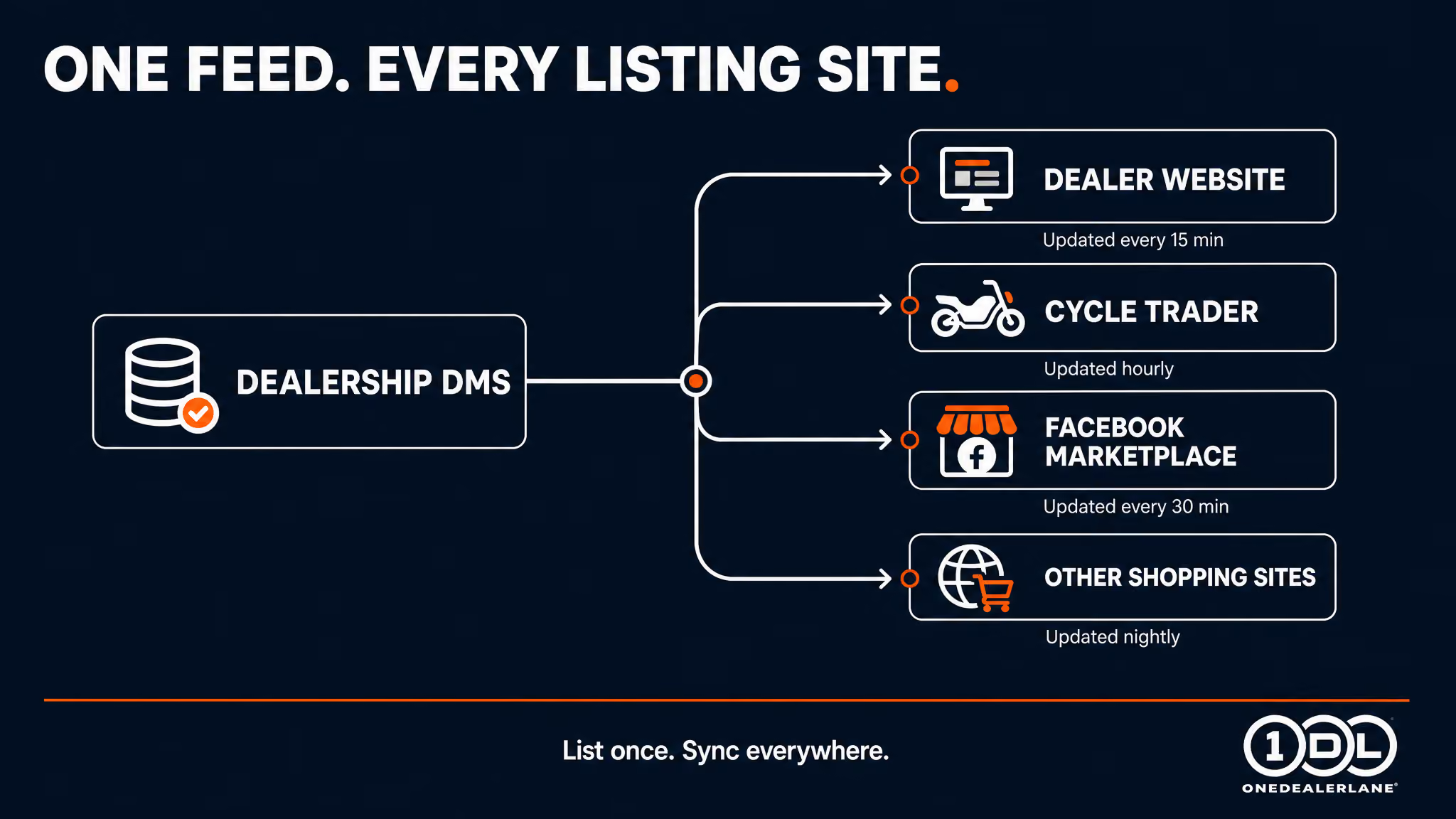
Powersports dealers commonly send inventory to their dealership website, Cycle Trader, Facebook Marketplace, OEM shopping pages and other listing sites. Many do not use a separate inventory management system. They depend on the DMS and their website or feed vendor to carry the unit information everywhere customers shop.
The catch is that these updates usually do not happen at the same time. One website may refresh overnight. Another may update later in the day. A third may reject a record and leave the old listing in place. A unit sold this morning can therefore remain online somewhere else for days, even though the DMS is correct.
Price can drift just as easily. A dealer may store MSRP, asking price, sale price and internet price in different DMS fields. The dealership website may display one field while a marketplace displays another. Change the price in the wrong place, and one listing updates while another keeps showing yesterday's number.
Availability labels create similar confusion. One system may treat a hold as available. Another may publish an on-order unit as in stock. Photos can also mislead when an OEM stock image looks like the actual unit. These are small setup choices until a customer drives across town for something that is not there.
This matters because customers do not shop in one channel. Powersports Business, reporting on LeadVenture research, says 54% of dealership website traffic occurs after 5 p.m. It also notes that shoppers move among Google, dealer websites, Facebook Marketplace, YouTube and social media. Those figures are vendor-reported, but the operating reality is familiar: customers compare what they see, and inconsistencies make the dealership look unreliable.
AI does not change the basic problem
Artificial intelligence is starting to enter this journey, but it is not the main issue for most powersports dealers today. Ekho is one visible example offering a 24/7 online sales agent. Whether the customer uses an AI assistant or a traditional marketplace, however, both depend on the same basic information: is the unit really available, and is the price right?
Agree on what customers should see
The first fix is simple: decide what the public should see. Which DMS price is the real online price? Which statuses should appear for sale? When should a held, pending or sold unit disappear? Which photo is the actual unit, and which is only a stock image? Write down those answers so the dealership, website company and listing partners are working from the same rules.
Next, ask how long each site takes to update. Google recommends sending vehicle inventory at least once per day and allows more frequent updates. That confirms an important point: a feed is a delivery schedule, not a live window into the DMS. A daily update may be fine for some details, but a sold unit or major price change may need faster attention.
Check what customers can actually see
Do not assume that a successful feed means the listings are correct. Compare the number of active units in the DMS with the dealership website and major marketplaces. Check a few units sold yesterday. Check today's price changes. If something is missing, duplicated or stale, give one person responsibility for getting it corrected.
A dealer does not need a technical project to get started. Each morning, check yesterday's sold units, today's price changes and any feed failures. Each week, sample new, used, on-order and held units on the places customers shop most. Each month, confirm with every major listing partner which DMS field it uses for price and availability.
Give the checklist to one owner
One Dealer Lane is working on better inventory synchronization, cleaner unit information, search and comparison tools. That work is underway. The immediate lesson is simpler: know where your DMS sends inventory, know which price and status each destination shows and verify that important changes actually appear.
Your DMS can say sold while the internet keeps selling the unit. Preventing that does not require more jargon. It requires one owner, a short checklist and regular proof that the online shelf matches the physical one.
The DMS may be right while the customer-facing inventory is still wrong. — One Dealer Lane
About the author
Param Ramakrishnan is the CEO of One Dealer Lane. He works with powersports, marine, and RV dealers of every size on connecting fragmented inventory, sales, credit, and F&I workflows into a reliable dealership operating record. He writes about dealer operations, digital retail, data quality, and the practical work required to make dealership technology reflect how recreation-vehicle retail actually runs.
Sources
- Internal research - anonymized powersports dealership inventory syndication, field mapping and sold-unit reconciliation workflows (2026)
- Powersports Business - The New Digital Dealership
- Google Merchant Center - Upload a vehicle feed
- Meta Business Help Center - Upload products with a scheduled data feed
- Cycle Trader - Powersports marketplace
- Ekho - 24/7 vehicle commerce and AI Sales Agent
Back to Top
Get more from every deal
Sign up for a free trial and start driving higher gross this month. No commitment, just results.
(877) 421-0135