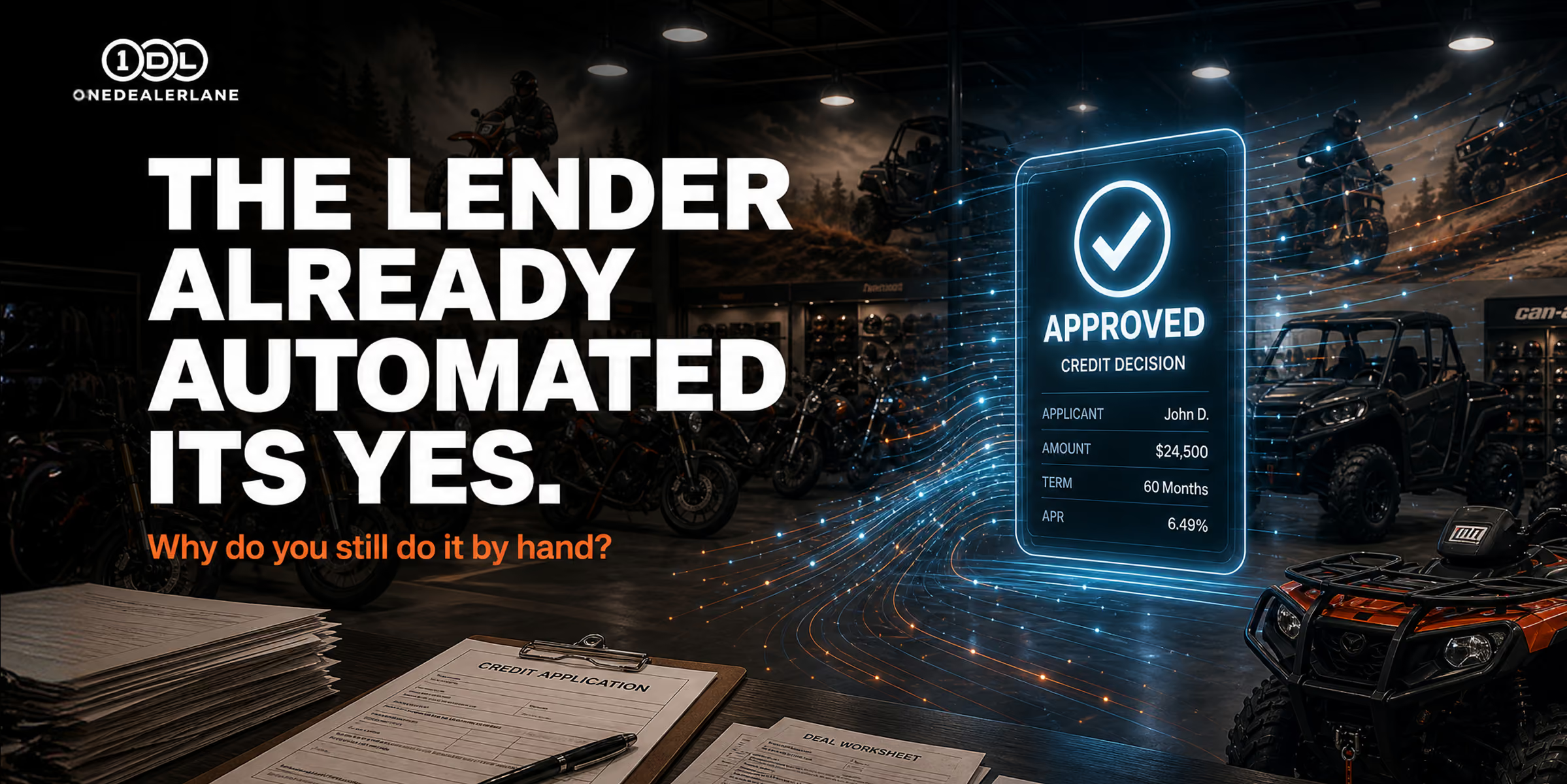
Somewhere between the customer picking out a unit and the finance office printing paper, something changed on the other end of the wire — and most powersports dealers never saw it happen. The lender you submit to no longer has a person reading your application line by line. It has models. It has automated stipulation checks, document-fraud screens, and decision engines that can return a yes in the time it takes your F&I manager to find the right clipboard.
Auto lenders are now deploying agentic AI across underwriting, compliance, and collections. One lender's software team literally describes what it wants to an AI model and ships the tool the same week. This is not a pilot program in a lab. It is the machinery your deals already flow through, today, every time you hit submit.
Here is the uncomfortable question: if the lender's yes is automated, and the customer found the unit online in thirty seconds, why is the dealership still the slowest, most manual step in the transaction? And here is the answer nobody in the software business wants to say out loud — because "dealership AI" has been sold to you as a chatbot, when it should have been built as a desk.
This piece is about what lender-side automation actually means for a powersports store, why your deal data quality just became a competitive weapon, and what dealership AI looks like when it is done in the right order.
The Approval Got Automated While You Weren't Looking
Start with what happened on the lender side, because it explains everything that follows. Auto Finance News reported in July that auto lenders are adopting agentic AI and "vibe coding" across underwriting, compliance, and collections. At Arivo Acceptance, a five-person team builds new software by describing what it wants to AI models like Claude and Microsoft Copilot — software that used to take quarters now ships in days. Across financial services, firms are earmarking meaningful shares of their IT budgets for AI, and the underwriting desk is where much of it lands first.
Powersports lending is not exempt. The lenders a powersports store submits to every day are the same institutions racing to automate decisioning, verification, and fraud screening. Auto Finance News has been tracking AI reshaping powersports retail and lending specifically, with OEMs eyeing the next phase. The direction of travel is not in dispute.
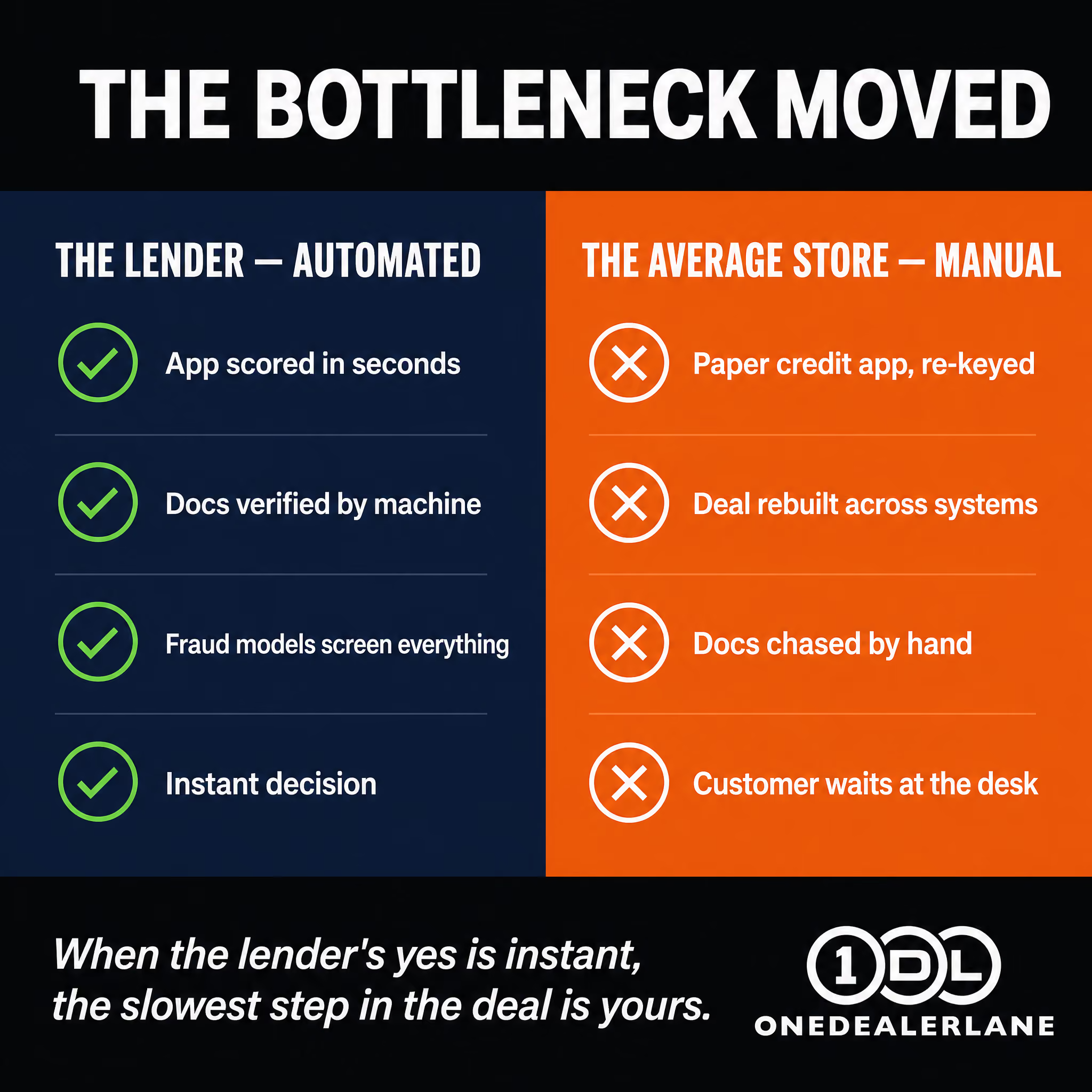
What does an automated lender actually do differently? Three things that matter to your store. First, it scores clean applications in seconds — no queue, no human in the loop for the straightforward deals. Second, it verifies automatically: income, residence, identity, and unit data get checked by machine against source data, not eyeballed by a funding analyst. Third, it screens every document with fraud models trained on millions of applications, because — as we will get to — the fraudsters automated first.
Notice what is missing from that list: patience. An automated decision engine does not wait gracefully. It processes what you send, exactly as you send it. Feed it a complete, structured application and it answers instantly. Feed it a re-keyed, half-legible, internally inconsistent one and you get stips, delays, and conditional approvals — or a decline the deal never deserved.
In powersports, this is happening while the industry still runs a spectacular amount of paper. The gap between how the money side of the deal works and how the dealership side of the deal works has never been wider. And gaps like that are never neutral — someone is paying for them. Right now, it is you.
What an Instant Yes Does to Your Floor
Think about the last deal that stalled in your store. Odds are it did not stall because a lender was slow. It stalled because the deal was rebuilt by hand at every step: the customer filled out a paper credit app, someone re-keyed it into a portal, the desk built numbers in one system, the menu lived in another, and the deal jacket got assembled from four sources with three chances to introduce an error at each step.
Now put that store next to the 2026 lender. The approval takes seconds; your process takes hours. The bottleneck did not disappear when lenders automated — it moved. It moved onto your showroom floor, into your F&I office, into every re-keyed field and every walk to the printer. When every lender answers every dealer at roughly the same automated speed, lender choice stops being your speed advantage. The only variable left is how fast and how cleanly your store can build and submit the deal.
That reframes speed as a data-quality problem, not a hustle problem. Your people are not slow; your process makes them slow. A store that captures the application digitally once, structures the unit and deal correctly upfront, and submits complete packages is operating at the lender's speed. A store that doesn't is standing in line at a counter that no longer exists, holding paperwork nobody upstream wants to touch.
There is a second-order effect worth naming: customer expectation. The customer who just financed a couch at checkout in four taps does not understand why a side-by-side takes four hours. Cox Automotive's Q2 2026 Dealer Sentiment Index shows dealers' outlook weakening on economic worry, with affordability pressure squarely on the consumer. In that environment, a customer who has mentally committed is an asset you cannot afford to leave sitting at a desk watching someone type their address for the third time. Momentum is margin.
The winners have noticed. The operators posting record powersports numbers this year are not winning because their customers are different. They are winning because their process is.
The Fraud Arms Race Raised the Bar for Your Paperwork
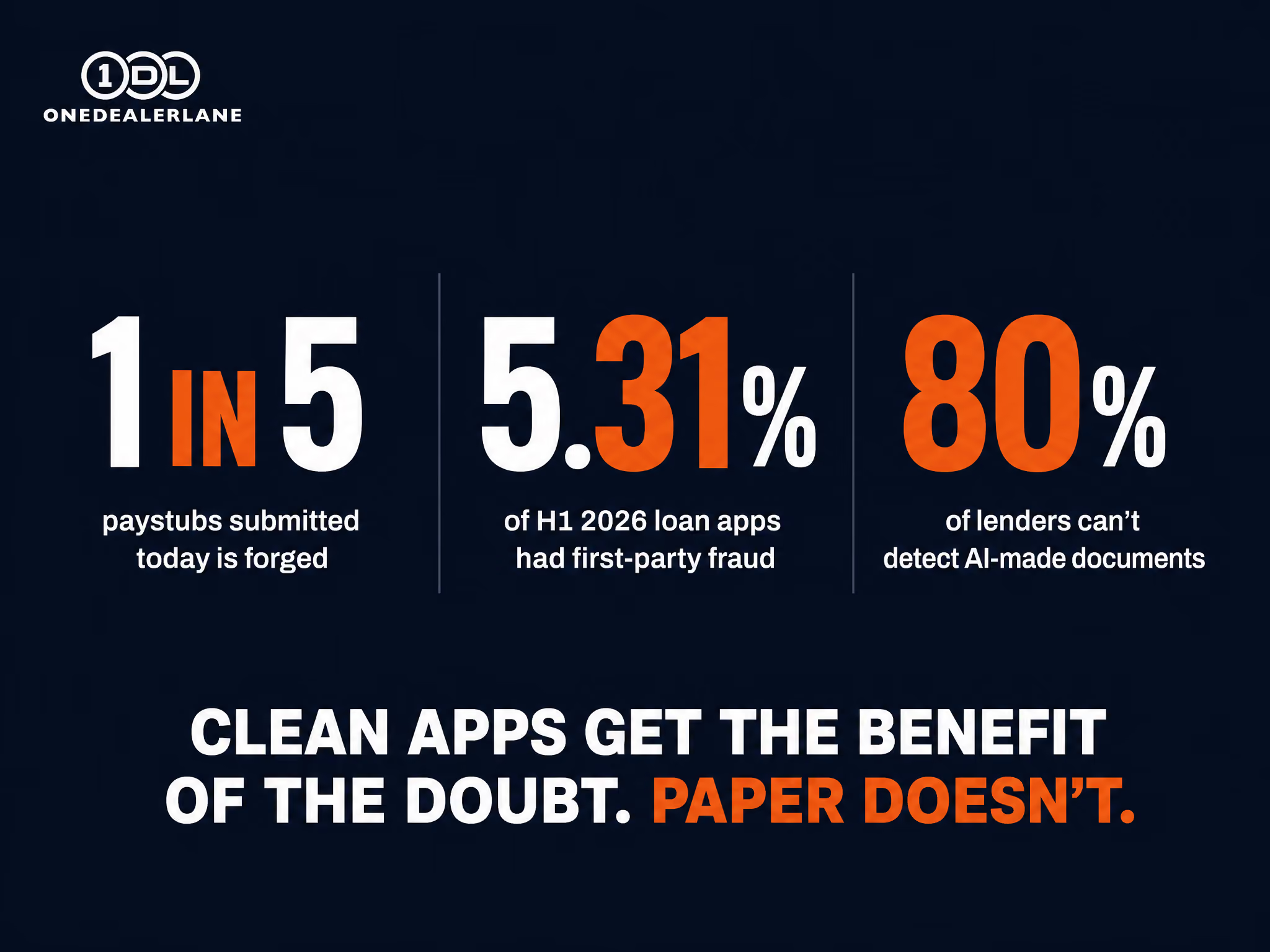
There is a darker reason lenders automated, and it directly changes how your applications are read: fraud went industrial. SentiLink data reported by Auto Finance News found first-party fraud in 5.31% of auto loan applications in the first half of 2026 — real customers inflating income, misrepresenting employment, or washing credit. Point Predictive puts total auto lending fraud exposure at a record $10.4 billion this year, roughly 69% of it first-party.
The tooling got cheap, too. Wells Fargo's head of auto originations strategy told an Auto Finance News webinar that fraudsters now use AI to fabricate income statements and proof of residence. An estimated one in five paystubs submitted today is forged, and 80% of lenders report little or no confidence in their ability to detect AI-generated document fraud. AI-generated paystubs used in fraud schemes grew 500% in a matter of months.
Understand what that does to the trust economics of your submissions. When a lender cannot trust documents on their face, it trusts process instead. A structured digital application with verified identity capture, source-document data, and a consistent trail reads as low-risk. A hand-keyed application with a photocopied license and a customer-supplied paystub — even a completely honest one — now carries the risk profile of its worst-case twin. Your cleanest customer can get treated like a fraud suspect because your process looks like the one fraud walks through.
This is the part of the AI story powersports dealers can act on this month. You cannot control the lender's fraud models. You can absolutely control whether your store's applications look like the clean population or the flagged population. Verified identity at the point of application, data captured once from the source document, and a digital chain of custody from credit app to funding package — that is not compliance theater. That is your store buying back the benefit of the doubt, on every deal.
And there is a compliance floor under all of this. Red Flags Rule obligations do not get easier when synthetic documents are a commodity. The store still running paper is not just slower — it is carrying risk it has no way to see.
What Dealership AI Actually Means
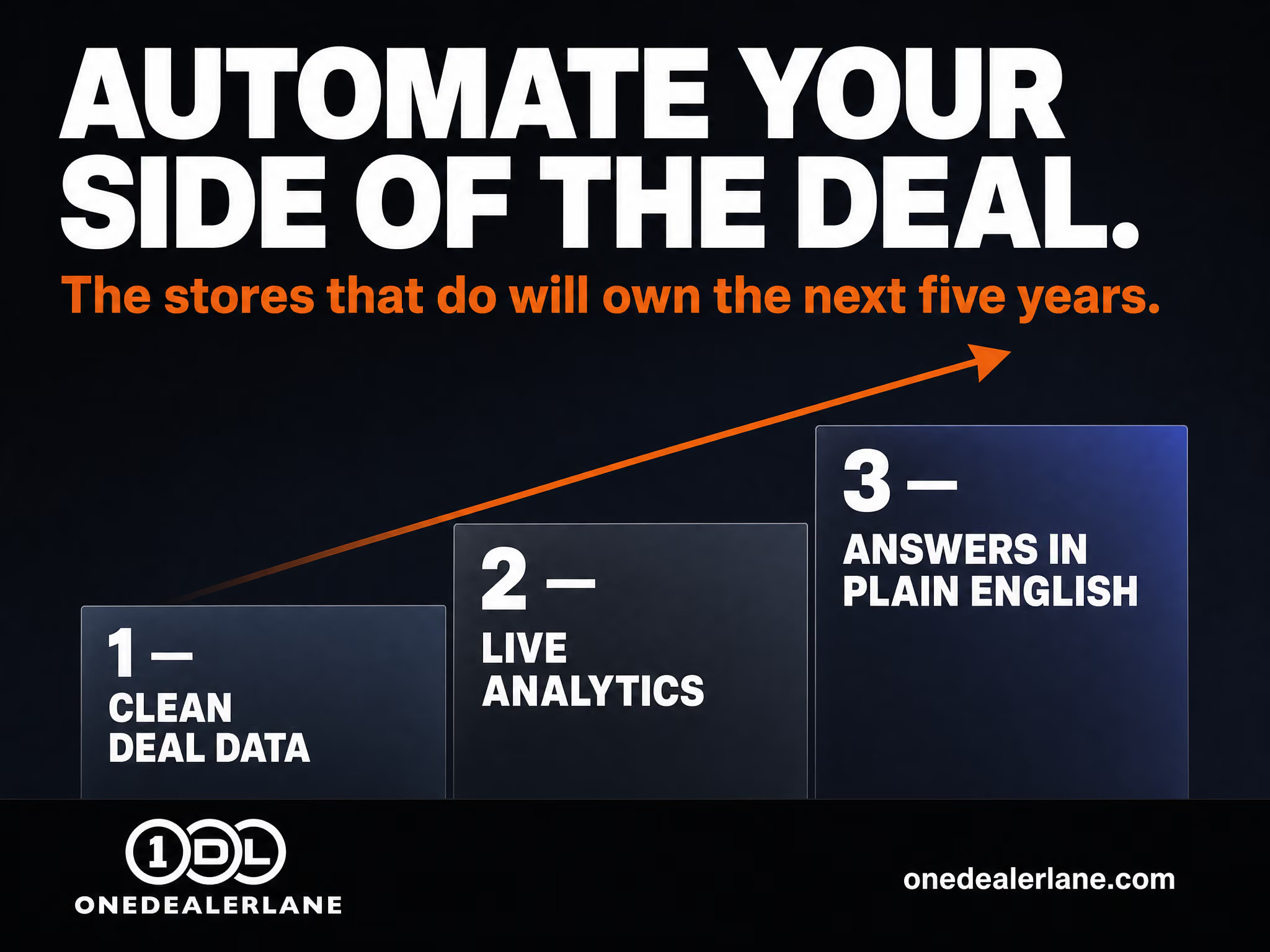
"Dealership AI" is the most abused phrase in retail software right now, so let us be precise. Powersports Business columnist Mark Coffey put it bluntly in August: AI is not coming for your dealership — apathy is. His advice: do not buy everything labeled AI; figure out where it actually moves the needle in your store. He is right, and the way to do that is to understand that dealership AI is a stack with three layers — and it only works from the bottom up.
Layer one is clean deal data. One digital workflow — credit application to desk to menu to lender submission — where information is captured once, structured correctly, and flows through without re-keying. This layer is unglamorous and it is 80% of the value. It is also where most stores fail before they start, because their deal data is scattered across a DMS, a lender portal, a menu tool, and a legal pad.
Layer two is analytics you can act on while the deal is still alive: quote-to-close by salesperson, F&I product penetration by deal type, PVR front and back, turn time by stage. Not month-end archaeology — live numbers, because a margin problem you find at month-end is a donation you already made.
Layer three — the part that deserves the name AI — is the answer layer: the ability to ask your store questions in plain English and get answers grounded in your actual deal data. What is my back-end gross on cash deals this quarter? Which lender is approving my 650-and-below customers fastest? How did the weather week affect my UTV traffic? That capability exists in powersports today. It is not science fiction; it is a query against clean data.
Here is the trap: buying layer three without owning layer one. AI on top of leaked, re-keyed, backfilled deal data does not give you insight — it gives you confident fiction. If your team quotes in one system, closes in another, and reconciles later, your funnel data is a story someone typed after the fact, and no model can fix that. Coffey's "technology gap becoming a profitability gap" is real, but the gap is not between stores that bought AI and stores that didn't. It is between stores whose data is true and stores whose data is theater.
The Dealer-Side Playbook: Five Moves
Move one: kill the paper credit application. This is the single highest-leverage change, because the credit app is where deal data is born. Digital capture with identity verification at the point of application — the customer photographs a license, the application populates from the source document — eliminates the transcription errors and the fraud-shaped ambiguity in one step. Clean birth, clean deal.
Move two: structure the deal once, upfront. Unit, trade, taxes, fees, products — built correctly in one place, flowing to credit, menu, and contracts without being rebuilt. Multi-unit and packaged deals (a hull with two engines and a trailer, a bike with a trade and accessories) are exactly where hand-built deals crack, and exactly where structure pays.
Move three: submit complete, not fast-and-sloppy. Automated lenders reward completeness — the difference between an instant approval and a stip-and-wait cycle is usually a missing field your process should never have allowed to be missing. Full-spectrum lender routing only works when every submission carries the whole picture.
Move four: measure the funnel honestly. If your team can route around your process, your close rate is unknowable — and so is everything downstream of it. Adherence is not a management vanity metric; it is the difference between analytics and fan fiction. Make the compliant path the fastest path and the data fixes itself.
Move five: only then, ask the AI questions. Once layers one and two exist, the answer layer is where the compounding starts — spotting the F&I product that dies on cash deals, the lender whose approvals fund three days slower, the salesperson whose quotes never see a menu. That is dealership AI earning its name: not replacing your judgment, feeding it.
Notice what is not on this list: replacing your DMS, hiring a data team, or buying a chatbot. The playbook is sequence, not spend.
Where One Dealer Lane Fits
One Dealer Lane was built by dealers around exactly this sequence. Quick Lane is the clean-birth layer: a digital credit application with ID scan — the customer photographs the front and back of a license and the application populates itself — feeding lender submission without re-keying. Sales Lane structures the deal once, upfront, including the multi-unit and packaged deals that break hand-built processes. Menu Lane presents F&I on every deal — financed or cash — so penetration is a number you manage, not an accident. And Fast Lane connects it into one workflow, which is what makes the data underneath ODL Copilot — the platform's AI and analytics layer — actually true.
We are deliberately not leading with the AI. The AI is the reward for running a clean process; it is layer three sitting on a foundation most software vendors skip. The lender already automated its yes. The stores that answer with an automated, honest, structured deal of their own are the ones that will own the next five years of this industry.
Want the next teardown like this one in your inbox? Subscribe to the One Dealer Lane blog. And if you would rather see the stack than read about it — book a Fast Lane demo and bring your messiest deal.
FAQ: Dealership AI in Powersports
What is dealership AI in powersports?
Dealership AI is software that applies machine intelligence to a dealership's own deal data — sales funnel, desking, F&I, and lender submissions — to surface answers a manager would otherwise dig for manually. Done right, it is a three-layer stack: clean structured deal data, real-time analytics, and a plain-English answer layer on top. A chatbot on your website is not dealership AI; analytics grounded in your live deal flow is.
How does automated lender decisioning affect powersports dealers?
When lenders automate underwriting and verification, approvals become near-instant for clean applications — which moves the bottleneck to the dealership. Stores that submit complete, digitally captured, structured applications get faster decisions and fewer stips; stores that re-key paper applications inherit delays and extra scrutiny, especially as lender fraud models tighten.
Do I need to replace my DMS to use dealership AI?
No. The prerequisite for useful dealership AI is a clean digital deal workflow — credit application, desking, menu, and lender submission captured once and connected. That layer can sit alongside an existing DMS. What you cannot skip is data quality: AI built on re-keyed or backfilled deal data produces unreliable answers.
Why does F&I data quality matter more now?
Two reasons. First, automated lenders read process quality as risk signal — verified, source-captured application data gets the benefit of the doubt that hand-keyed paper no longer gets, in a market where an estimated one in five paystubs is forged. Second, every downstream number a dealer manages — PVR, penetration, close rate — is only as honest as the data feeding it.
Sources
- Auto Finance News — Auto lenders look to agentic AI, 'vibe coding' in underwriting, compliance, collections (July 2026) — https://www.autofinancenews.net/allposts/technology/auto-lenders-look-to-agentic-ai-vibe-coding-in-underwriting-compliance-collections/
- Auto Finance News — Wells Fargo head of auto originations strategy IDs 3 ways to fight AI-based fraud (August 2026) — https://www.autofinancenews.net/allposts/technology/wells-fargo-head-of-auto-originations-strategy-ids-3-ways-to-fight-ai-based-fraud/
- Auto Finance News — EXCLUSIVE: 5.31% of auto loan applications had first-party fraud in H1 (August 2026) — https://www.autofinancenews.net/allposts/risk-management/exclusive-5-31-of-auto-loan-applications-had-first-party-fraud-in-h1/
- Point Predictive — 2026 Auto Lending Fraud Trends Report ($10.4B exposure) — https://pointpredictive.com/press-releases/point-predictive-releases-2026-auto-lending-fraud-trends-report-fraud-exposure-reaches-record-10-4-billion/
- Powersports Business — Coffey: The AI conversation every dealer needs to have (Aug 4, 2026) — https://powersportsbusiness.com/news/dealers/2026/08/04/coffey-the-ai-conversation-every-dealer-needs-to-have/
- Auto Finance News — AI begins reshaping powersports retail, lending as OEMs eye next phase — https://www.autofinancenews.net/allposts/powersports/ai-begins-reshaping-powersports-retail-lending-as-oems-eye-next-phase/
- Cox Automotive — Q2 2026 Dealer Sentiment Index — https://www.coxautoinc.com/insights/q2-2026-cadsi/
Back to Top
Get more from every deal
Sign up for a free trial and start driving higher gross this month. No commitment, just results.
(877) 421-0135