Back
You Didn't Buy a Trade. You Bought 90 Days of Dead Inventory
By Zac Jones, Head of Sales & Marketing, One Dealer Lane · ~4 min read
July 21, 2026
Share:

A trade isn't profitable because the appraisal looks good. It's profitable when demand, recon, the payment story, and the exit path all work — before the customer leaves the desk.
Miss one of those, and you didn't buy a trade. You bought a 90-day problem parked in the corner.
Pre-owned powersports is one of the clearest opportunities in the market right now. Powersports Business reports average wholesale prices rose early in 2026, and used values are still running about 10% above the same point last year. Stronger trade equity is helping customers step into new units, too.
That does not make every trade a retail opportunity. It makes appraisal discipline worth more than it's been in years.
The appraisal is not the decision
The mistake is treating the appraisal as one number. A real trade decision has two outputs: what you can offer today, and how the unit leaves the store. A used bike, ATV, side-by-side, or PWC only becomes profitable when acquisition cost, recon timeline, market demand, payment position, and exit strategy line up.
Run every trade through five gates before you commit. Fail a gate, and you either sharpen the number, sharpen the plan, or pass.
Gate 1 — Demand before book value
Start with demand, not book value. Who buys this unit, in this market, in the next 30 to 45 days? Weigh local use, seasonality, brand fit, trim, color, miles, condition, and what's already on your floor. A strong number on a unit you already stock three of is not a good trade — it's a discount you'll be forced to give later.
Gate 2 — Know the all-in cost before the handshake
Build the all-in number before the customer leaves: actual cash value plus parts, labor, transport, detail, merchandising, and the price adjustment you'll need to compete. Recon starts at appraisal — not after the unit sits for a week. The widely cited retail standard is blunt: three days of recon is rock-solid, and every day past that eats the margin you just appraised for.
Make the review short but cross-functional. Sales owns the customer and the payment objective. The used manager owns the market and the exit. Service or parts flags the recon risk. F&I flags any structure that leans on the trade's equity to work. Ten focused minutes before the appraisal is presented beats an optimistic number that sits for 90 days.
And separate days-to-ready from days-in-stock. A unit waiting on an estimate, a part, a title, or a photo isn't just aging — it's exposed to a market move before you can even shop it. Give one person ownership of the ready date, and put missed dates in the same weekly review as aged inventory.
Gate 3 — Watch the new-unit market
Used values don't move in isolation. The moment an OEM drops a big rebate or promo financing offer on an aging new unit, comparable used inventory loses its price advantage — fast. A manager who knows the current incentive landscape can decide whether to retail now, price more aggressively, or wholesale before the market turns.
Gate 4 — Use equity to sell the next unit, not to justify the last one
Strong used values create positive equity, which gives a customer room to move into another unit while keeping the payment close to what they already know. That's a front-end opportunity — not a license to overpay. Build the trade and the replacement into one payment conversation, so the customer sees why the deal works and you can see whether the structure is actually real.
Gate 5 — Pick the exit before you own it
Decide the exit path before you accept the trade. Use this to call it at the desk:
Passing is not losing. It's the disciplined choice that keeps your cash free for a unit that actually turns.
Manage velocity before it manages you
Inventory velocity is more than days in stock. Track: days from trade-in to retail-ready, recon estimate vs. actual, days retail-ready to sold, gross after age-related discounts, and the share of trades that end retail vs. wholesale. Those five numbers tell you whether you have an appraisal problem, a recon bottleneck, a pricing issue, or simply the wrong units for your market.
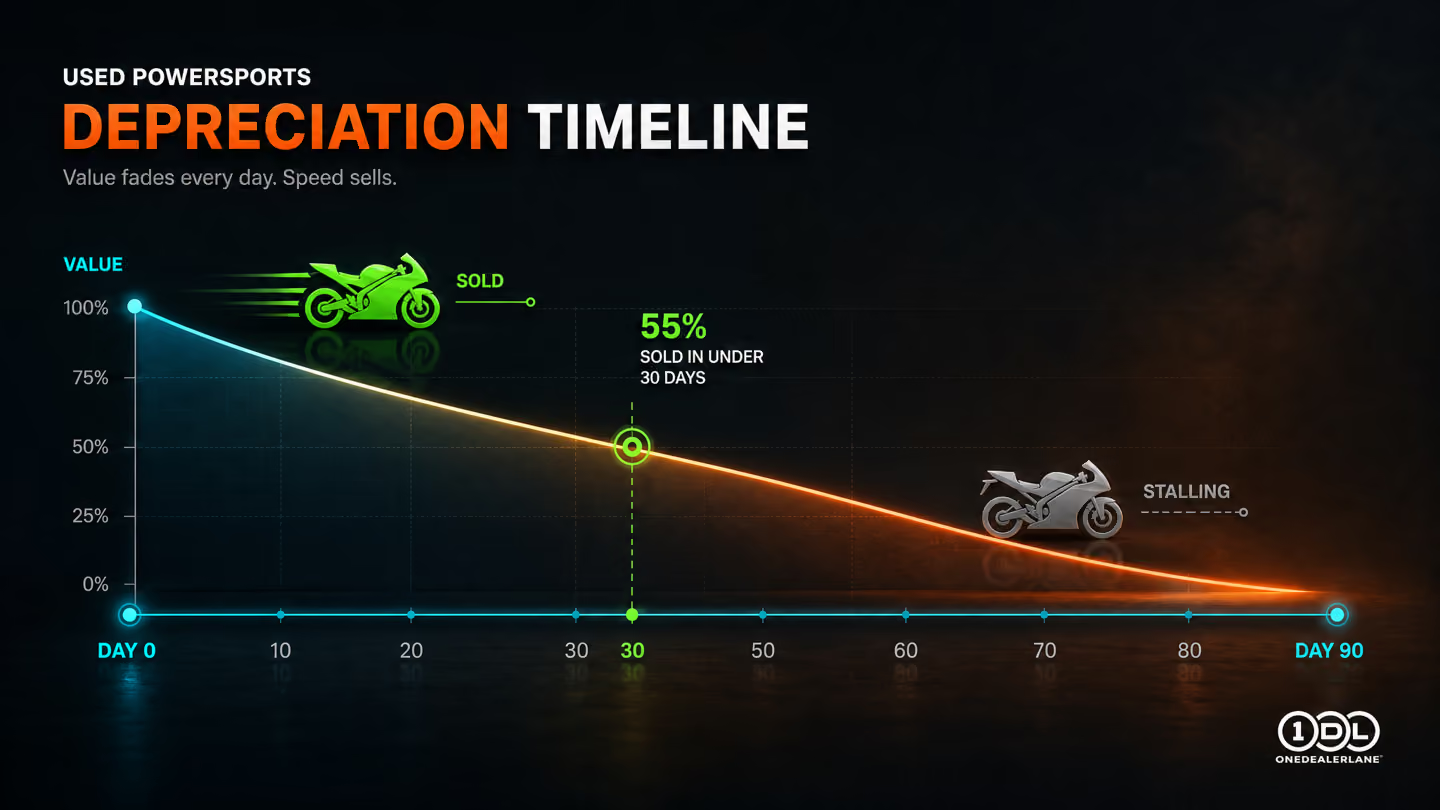
Then give yourself a hard target. Cox Automotive's vAuto — the retail-auto side of this same problem — has long held a benchmark worth stealing for the powersports floor: retail at least 55% of your inventory in under 30 days of age to keep velocity and profitability healthy. Its founder, Dale Pollak, put the why in one line every used manager should tape to the wall: “Used vehicles today are like fresh fish. Every day they sit, they're worth a little less.” A used bike, ATV, side-by-side, or PWC is no different.
Powersports Business put the lesson plainly: a fair profit tomorrow beats holding for the perfect margin six months out. The point isn't to discount blindly — it's to trade a hoped-for gross for a faster, better-informed reinvestment of cash. The best used departments aren't the ones that never miss. They're the ones that recognize the exit quickly and keep capital moving.
Before your next appraisal, ask one question: would you rather own this unit, or have your cash back in 45 days? If the answer isn't obvious, the deal needs a sharper number, a clearer recon plan, or a different exit before anyone signs.
About the author
Zac Jones is Head of Sales & Marketing at One Dealer Lane. He works with powersports, marine, and RV dealers on modernizing the sales and F&I process — from the first online touch through a transparent, customer-facing deal — so a single showroom can win every buyer who walks in, whatever generation they belong to.
Sources
- Powersports Business — “Pre-owned market finds its groove in Q1” (July 15, 2026)
- Powersports Business — “S&P downgrades Harley to ‘junk grade’…” (July 15, 2026)
- National Powersport Auctions (referenced in the reporting above)
- Cox Automotive / vAuto — Dale Pollak, “Full-Throttle Inventory Management” (55%-under-30-days velocity benchmark; retail-auto data applied as a cross-industry standard)
Back to Top
Get more from every deal
Sign up for a free trial and start driving higher gross this month. No commitment, just results.
(877) 421-0135