Back
More Lender Capital Won’t Fix a Bad Credit Application
By Param Ramakrishnan, CEO, One Dealer Lane | Approximately 4-minute read
August 17, 2026
Share:
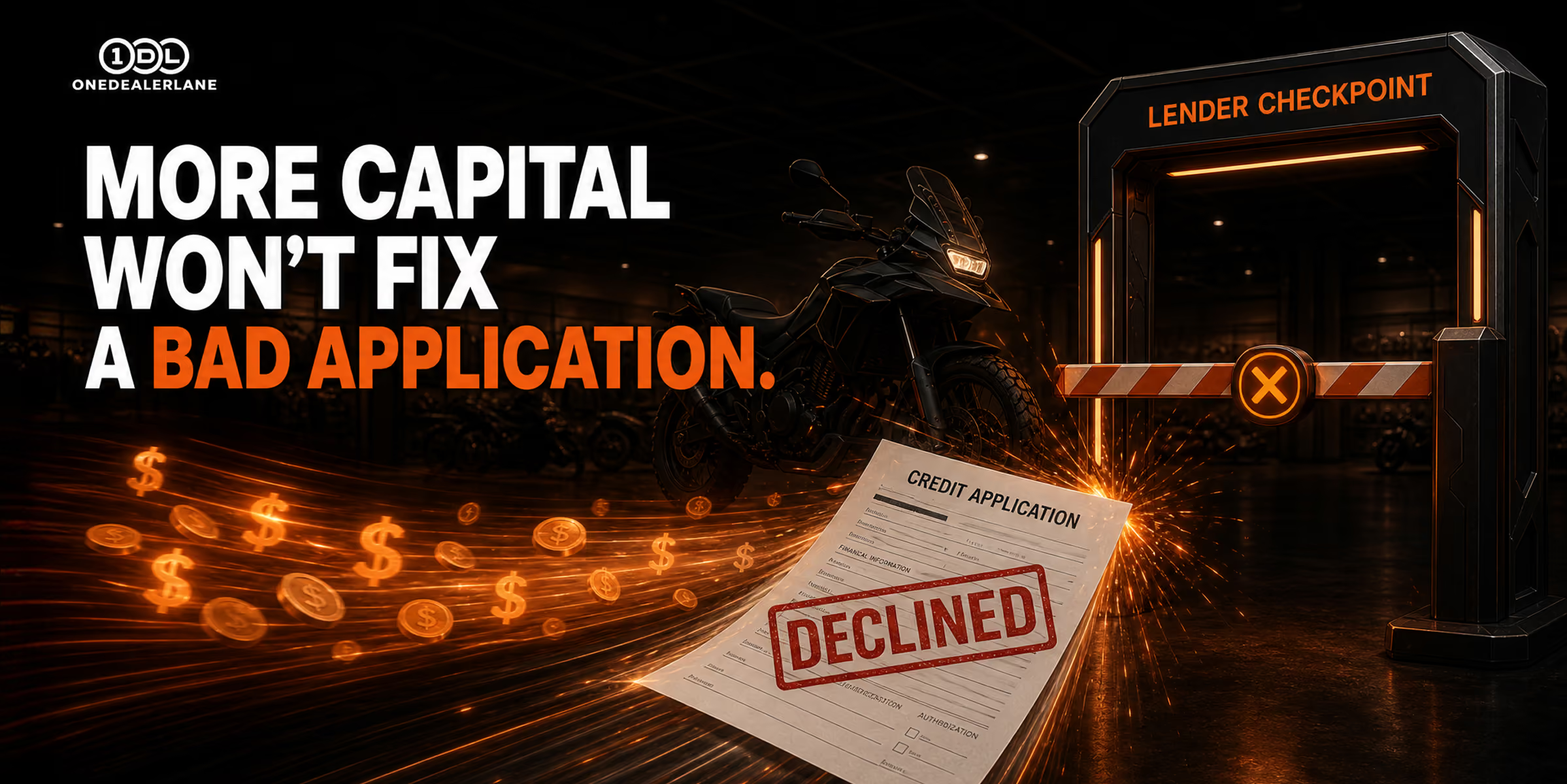
New funding can increase retail-finance and leasing capacity. Dealers still control whether the file they send is complete, consistent, signed, and ready for a lender to evaluate.
Retail finance had a strong capital-markets week. Auto Finance News reported that Horsepower Financial closed a $50 million senior secured credit facility to fund its powersports lease originations, while Octane completed a $337 million securitization backed by RV and marine loans — which Octane called its largest RV and marine securitization to date. That is encouraging across powersports, marine, and RV retail. It is also easy to draw the wrong conclusion at the dealership. More capital — whether it funds retail installment lending or leasing — can support more activity; it does not automatically loosen a credit box, repair contradictory deal math, or supply information that never reached the lender. Before asking, “Which lender has money?” the desk should ask a more useful question: “Is this deal actually ready to underwrite?”
A bad application is not a bad customer
This is not about blaming an applicant with challenged credit. A bad application is a submission problem: missing fields, conflicting figures, unconfirmed information, an unsigned application, or a credit request that no longer matches the deal on the screen.
Regulation B defines a completed application as one for which the creditor has received the information it regularly obtains and considers for that type and amount of credit. Exact requirements vary by lender, program, state, applicable law, and the dealer’s role. The operating principle is simpler: a file is not complete merely because someone clicked Send.
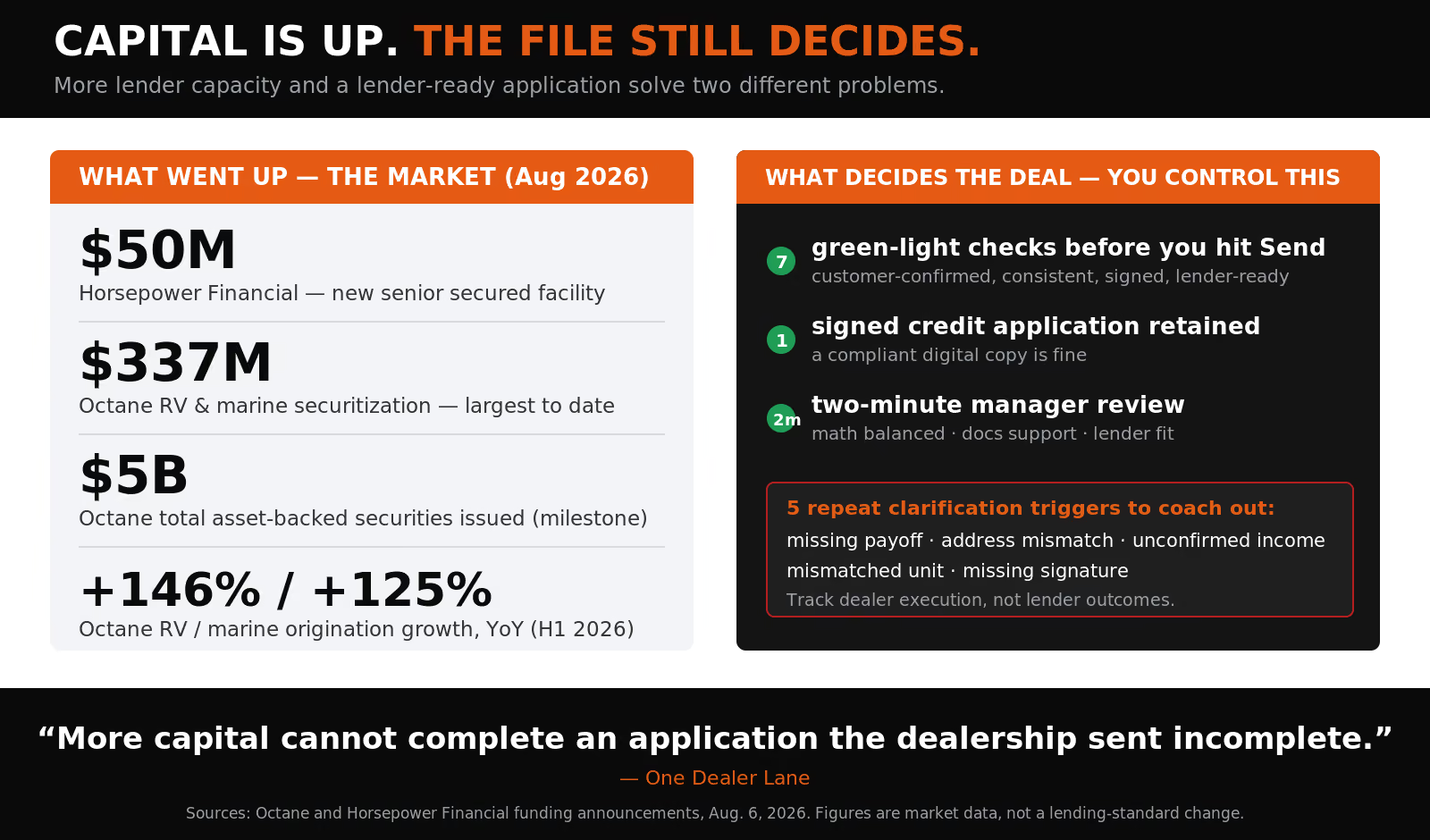
Seven green lights before Send
Use this as a manager quality-control framework — not as a substitute for lender instructions, dealership policy, or legal advice.
Track friction, not folklore
After submission, record the recurring reasons a file comes back for clarification: missing payoff, inconsistent address, unconfirmed income period, mismatched unit, missing signature, or an outdated program assumption. Do not turn that log into a claim that one lender “always” wants something. Use it to coach the step that created the repeat work.
The scorecard should measure dealer execution, not lender outcomes: files customer-confirmed before submission, discrepancies caught, signed applications retained, documents missing at review, and repeat clarification themes. Those measures show whether the process is improving without pretending the dealership controls underwriting.
The dealer-controlled advantage
More capital matters because it can support more qualifying business. The dealer’s job is not to manufacture a stronger borrower or promise a result. It is to transmit the customer’s real situation accurately, tie it to the actual deal, retain the required signed application, and send a package the lender can evaluate without first reconstructing what happened at the desk. This is the same discipline behind clean DMS-to-F&I handoffs — the deal should arrive complete, not get rebuilt downstream.
More capital cannot complete an application the dealership sent incomplete. — One Dealer Lane
Make lender-ready credit the standard — not a last-minute cleanup
One Dealer Lane connects the credit application and the deal structure in a single workflow — Quick Lane for the customer-confirmed credit application and Sales Lane for the deal structure, on the Fast Lane hub — so sales and F&I review the same customer-confirmed information before submission. Request a 20-minute walkthrough. Free, no commitment.
Related reading: Stop Blaming F&I: The 5 Powersports Deal Handoffs · More Units, Less F&I Profit · Balloon Payments Come to Powersports
Frequently asked questions
What makes a powersports credit application “complete”?
Under Regulation B, an application is complete when the lender has received the information it regularly obtains and considers for that type and amount of credit. In practice that means identity, SSN, employment, and income are customer-confirmed; the unit and deal structure match; required documents support the file; and a signed credit application is retained. Clicking Send does not make a file complete.
Does more lender funding mean easier approvals?
No. New capital, credit facilities, or securitizations can expand how much a lender is able to fund. They do not loosen a credit box or complete a file the dealership sent incomplete. Approval still depends on a consistent, signed, lender-ready application.
What are the most common reasons a file comes back for clarification?
Missing payoff, an inconsistent address, an unconfirmed income period, a unit that no longer matches the deal, a missing signature, or an outdated program assumption. Track these so you can coach the step that created the rework.
Can we keep a digital signed credit application?
Yes, when permitted by your dealership's process and applicable law — a compliant digital signature and a retained digital copy are acceptable.
About the author
Param Ramakrishnan is the CEO of One Dealer Lane. He works with powersports, marine, and RV dealers to connect fragmented sales, credit, and F&I workflows into a single deal record. He writes about dealership operations, retail-finance handoffs, data quality, F&I performance, and the practical process changes that help teams move deals forward without losing accuracy or customer context.
Sources
- Auto Finance News — “Two powersports lenders close funding deals in early August” (Aug. 7, 2026)
- Octane — “Octane Completes $337 Million RV and Marine Asset-Backed Securitization” (Aug. 6, 2026)
- citybiz — “Horsepower Financial Secures $50 Million Credit Facility From Coromandel Capital” (Aug. 6, 2026)
- Consumer Financial Protection Bureau — Regulation B §1002.2, definition of a completed application
- Consumer Financial Protection Bureau — Regulation B §1002.9, notifications / action on applications
- Consumer Financial Protection Bureau — Regulation B §1002.7, rules concerning signatures
Back to Top
Get more from every deal
Sign up for a free trial and start driving higher gross this month. No commitment, just results.
(877) 421-0135