Back
Balloon Payments Come to Powersports: What H-D Flex and Residual-Value Financing Mean for Your F&I Desk
By Robert Ward, Sales Advisor & Trainer, One Dealer Lane • ~6 minute read
July 15, 2026
Share:
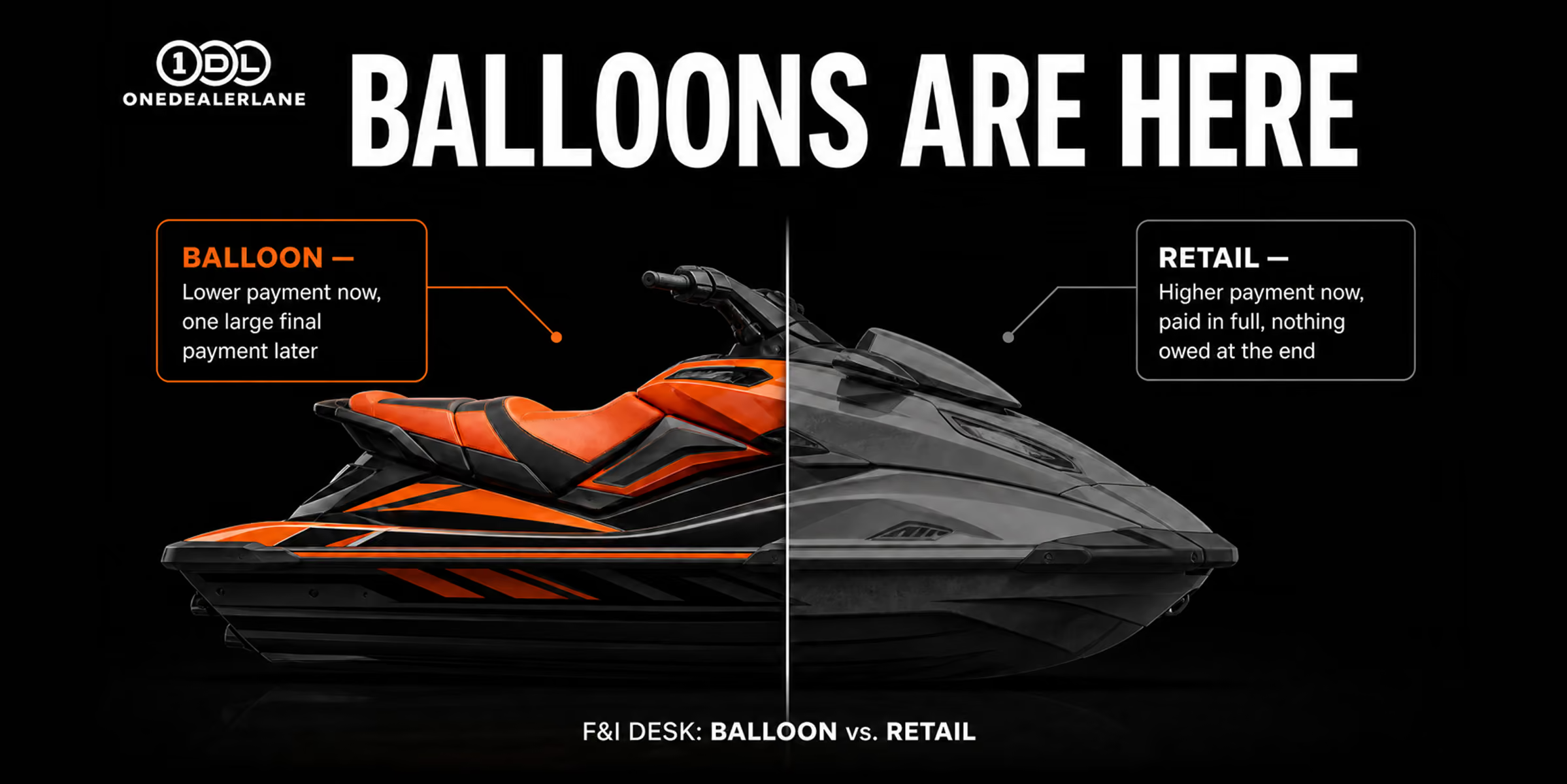
A buyer is standing on your floor. They want the touring model. They can afford the stripped-down one. A few years ago you'd bridge that gap with a low-rate conventional loan - today you can't. Powersports interest rates now run anywhere from about 6.7% to 36% depending on credit (AppOne), and fewer buyers are qualifying for the low-rate conventional loans that used to close deals - which is why OEMs leaned on cash rebates to push June sales (Auto Finance News). Faced with payment-shy buyers, three OEMs are offering a different structure to get riders on the unit they actually want: residual-value, or “balloon,” financing - Harley's H-D Flex, BMW Motorrad's EasyRide, and Ducati's Premier Financing.
What a residual-value loan actually is
With a conventional loan, the customer finances the whole price down to zero and owns the unit free and clear at the end. A residual-value loan (RVL) finances only part of the value up front. A residual - the unit's estimated worth at the end of the term — is set at purchase, and the customer makes lower monthly payments against everything except that residual. At the end, the residual comes due as one large final “balloon” payment.
If this sounds familiar, it's because the car business has run this play for years. Ford Options: Ford Credit's balloon plan works exactly the same way: a lower monthly than a conventional loan, the buyer owns the vehicle (it's not a lease), and a final balloon payment at term-end with the same three doors - pay it and keep, trade, or return. Ford leaned in so hard it stood up a dedicated website in 2024 just to walk buyers through the end-of-term math. Powersports is now importing a structure the auto world already normalized - which means your customers have likely seen it on a car lot, even if they've never seen it on a bike.
Harley's H-D Flex Financing runs 36- or 48-month terms through Eaglemark Savings Bank, with end-of-term options to trade in, keep it (pay off or refinance the balloon), or return it. Harley's own examples: as low as $199/month on a 2026 Street Bob with a $9,483 final payment, or about $347/month on a Grand American Touring model with a $15,685 balloon. A dealer-published example on a Road Glide at 8.99% APR works out to 47 payments near $290 and a final balloon around $11,924 - roughly half the note deferred to the end.
BMW Motorrad's EasyRide works the same way - pay a portion through monthly payments, then refinance or trade at the end (it's not offered in every state). One thing to say clearly to every customer: Harley describes Flex as “similar to a lease,” but it isn't a lease - the customer owns the motorcycle. The balloon is a final loan payment, not a lease buyout.
Ducati Premier Financing is the third OEM balloon program, and it runs on the same residual structure - lower monthly payments than traditional financing, with a final balloon payment due at the end. It's offered only on new Ducati motorcycles, for highly qualified buyers, and isn't available in every state. At term-end the rider has three choices: pay the final balloon in full and take the title, trade it in toward the next Ducati, or pay off and sell it.
Two things worth flagging to a customer: Ducati doesn't advertise a straight walk-away “return” option the way Flex does, and it markets no mileage caps and no excess-wear-and-tear charges — so the end-of-term math is just the balloon, without Harley's per-mile and wear add-ons (though Ducati notes wear and modifications can still affect a trade-in's value). Most other powersports OEMs — Polaris, Indian, Yamaha, BRP — still route to conventional installment lenders, so for now Harley, BMW, and Ducati are the three OEM balloon players.
Conventional vs. balloon, side by side
Balloon example (H-D Flex): 2026 Street Bob ~$199/mo with a $9,483 final balloon; Road Glide ~$290 × 47 payments, ~$11,924 balloon at 8.99% APR. Autos run ~30–45% lower monthly (AFG). Terms vary by dealer and model year — see Sources.
Where it genuinely helps
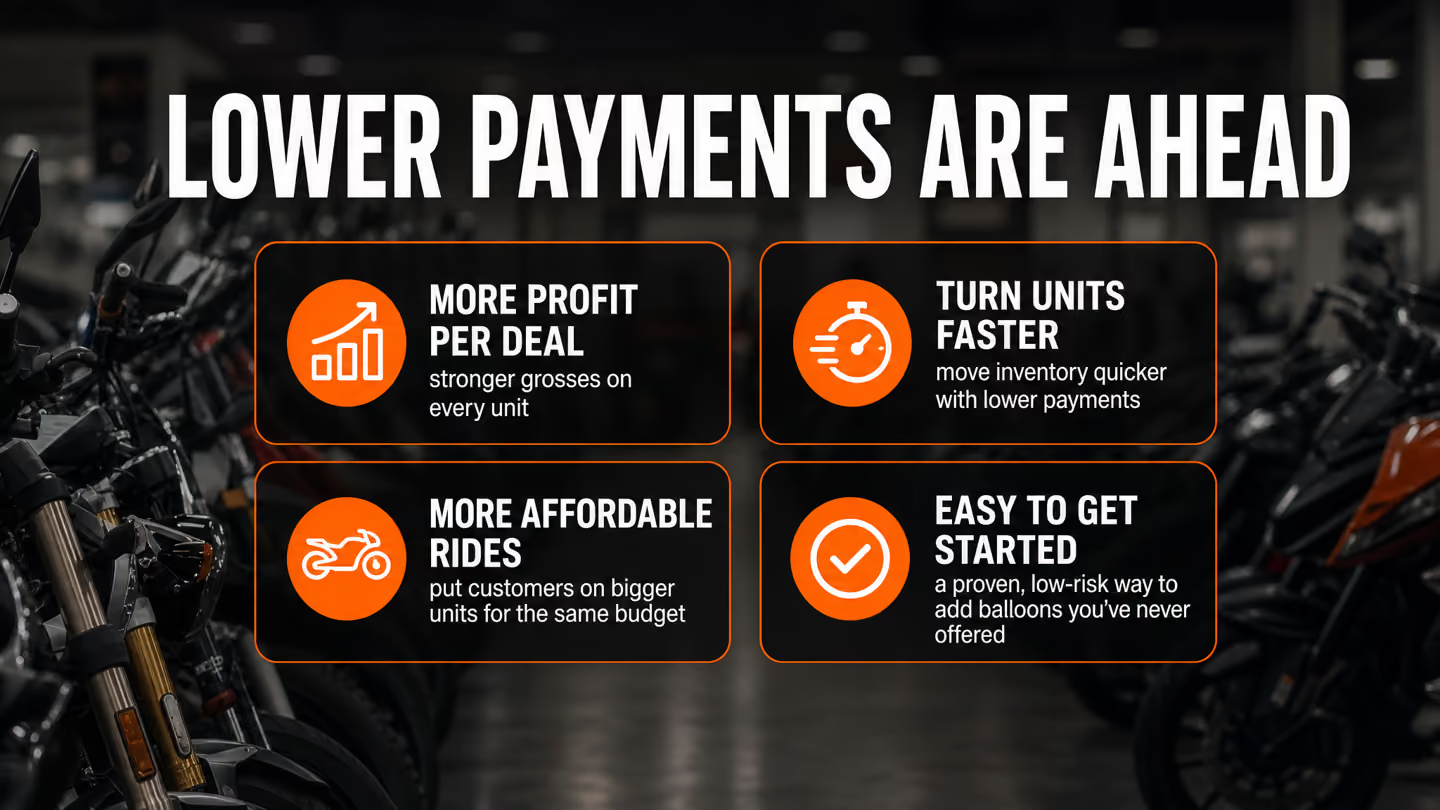
Used honestly, a balloon structure is a real tool. It lets a payment-focused buyer get onto the right unit - the touring model they wanted instead of the stripped one that fit the payment - because the monthly is anchored to only part of the value. It fits riders who trade up every few years anyway, since the shorter 36- or 48-month term lines up with an end-of-term trade. And in a market where OEMs are discounting to move metal, a lower advertised payment keeps a shopper in your store instead of walking over a number.
The risks you have to disclose
This is where a balloon deal earns trust or destroys it. Walk the customer through the trade-offs plainly:
- The balloon always comes due. Those low payments don't pay the unit off. At the end, the customer must be ready to pay the balloon, refinance it (at whatever rates apply then), trade, or return the bike.
- Negative-equity exposure. If the unit is worth less than the residual at trade or return, the customer is underwater — which is exactly why GAP is worth presenting on these deals.
- Return costs. Returning the bike can carry a fee (around $395 on Flex) plus excess-wear and over-mileage charges. Set that expectation on day one, not at turn-in.
- “Like a lease” isn't a lease. Make sure the buyer understands they own the unit and hold the title - this changes taxes and how they think about the deal.
- Advertised “as low as” payments must show the balloon. A low monthly with a hidden final payment is exactly the kind of advertising regulators scrutinize under the FTC Act and Truth in Lending balloon-disclosure rules. Surface the full picture - including the balloon and total of payments.
Present it in the open — on one screen
Balloon deals only work when the customer truly understands them, and that comes down to presentation. The cleanest way to build trust is to show the conventional payment and the residual-value payment side by side - same unit, same customer - with the monthly, the term, the end-of-term options, and the balloon all visible at once. When the buyer can see both paths and pick with full information, a balloon option becomes a genuine way to close a payment-sensitive deal rather than a surprise waiting at month 48.
That transparency is hard to pull off on a printed four-square or a spreadsheet that shows one scenario at a time. It's much easier when the deal is built digitally, in front of the customer, with both structures and the disclosures on the same screen - which is exactly the kind of presentation a modern F&I workflow should make routine.
Even Ford - with all of its resources - had to stand up a dedicated website just to explain the balloon to buyers. The lesson for your floor is the same: the structure isn't the hard part, the disclosure is. The dealers who win the payment-shy buyer this year won't be the ones with the lowest rate. They'll be the ones who can put both paths in front of a nervous customer on one screen, show the balloon in the open, and let them choose with their eyes open. That's not a bigger F&I team - it's a better F&I workflow. That's exactly what One Dealer Lane was built to do: put conventional and balloon side by side, every disclosure in view, inside the tool your desk already runs.
About the author
Robert Ward is a Sales Advisor & Trainer at One Dealer Lane. He works with powersports, marine, and RV dealers on sharpening the sales and F&I process - from desking and financing options to presenting deals a customer can actually understand. He writes about sales performance, financing structures, and closing more units without losing the customer's trust.
Sources
- Harley-Davidson USA — H-D Flex Financing (residual-value loan; 36/48-month terms; end-of-term options; current payment/balloon examples; financed through Eaglemark Savings Bank). Accessed July 8, 2026.
- Indianapolis Southside Harley-Davidson — H-D Flex Financing (RVL definition; worked APR example; mileage, tiers, return terms — dealer-sourced, vary by dealer/year). Accessed July 2026.
- BMW Motorrad — EasyRide balloon financing (finance a portion; refinance or trade at end; state availability; U.S. motorcycle product — not "Select"). Accessed July 2026.
- BMW Motorrad — Financial Services overview (GAP and protection products). Accessed July 2026.
- Ducati Financial Services — Financing, Leasing & Ownership (Ducati Premier Financing: residual/balloon structure; lower monthly payments with a final balloon payment; new bikes only; for highly qualified buyers, not in all states; end-of-term options — pay the balloon and take title, trade in, or pay off and sell; no mileage restrictions or excess-wear-and-tear charges; serviced by VW Credit, Inc. dba Ducati Financial Services). Accessed July 10, 2026.
- AppOne / Origence — "What Dealers and Lenders Need to Know About Powersports Financing" (rates 6.7%–36%; ~62% approval rate, 2024). March 21, 2025.
- Auto Finance News — "Rebates push powersports sales in June" (fewer buyers qualify for low-rate financing). June 23, 2026.
- Auto Finance News — Powersports Finance feed, incl. "Boat sales sink in May" (affordability pressure, elevated rates, fuel costs). June 29, 2026.
- Auto Financial Group — Residual-Based Financing (auto-market proxy: residual programs run ~30–45% lower monthly payments; leasing mainstream in autos). Accessed July 2026.
Back to Top
Get more from every deal
Sign up for a free trial and start driving higher gross this month. No commitment, just results.
(877) 421-0135