Back
Playbook vs. Freelance: Does a Documented Sales Process Actually Raise Close Rates?
By Josh Harnish, Customer Success Manager, One Dealer Lane • ~9 minute read
July 7, 2026
Share:
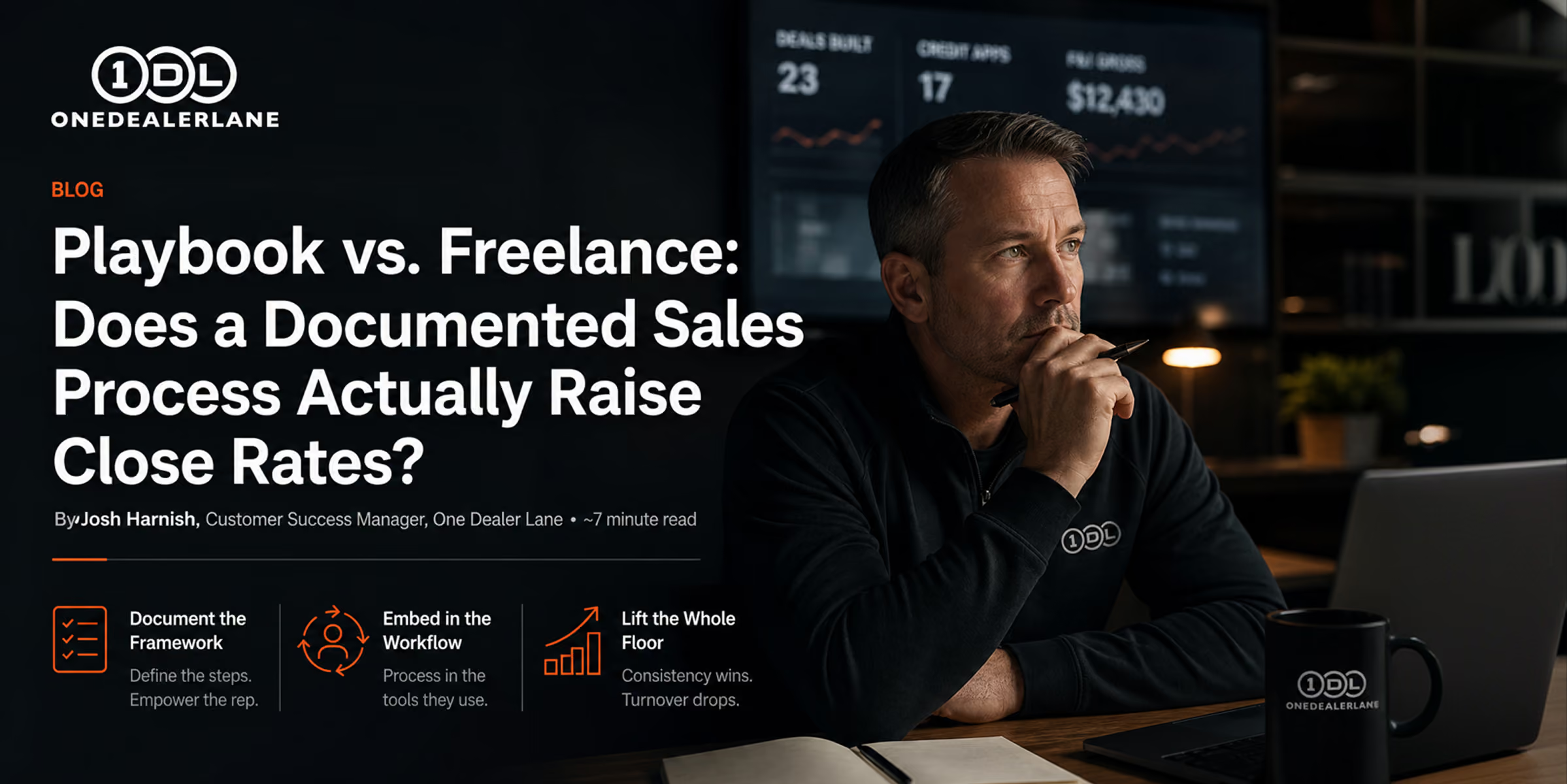
Every dealer group eventually writes the playbook. The steps to the sale. The CRM cadence. The exact way to present numbers. And every time, the same argument breaks out: the sales manager says a documented process lifts the whole floor, and the one killer closer says the script slows them down — and points at their board to prove it.
Both of them are partly right. The honest answer is that this debate is aimed at the wrong person. Your best closer isn't the question. The other 80% of your floor is. Here's what the data actually says — and why the stores that win don't choose between a playbook and talent. They build the playbook into the way the deal gets done.
What the data actually says about process
Harvard Business Review found an 18% difference in revenue growth between sales organizations with a formal, defined process and those without (2015). Not 18% more activity — 18% more growth.
The sharper finding is about adherence, not paperwork. CSO Insights found that pushing process adoption above 90% drove a 57.8% win rate and 72.4% quota attainment — while informal, ad hoc approaches underperformed and may be worse than doing nothing. The playbook on the shelf does nothing. The playbook people follow changes the numbers — which matters, since only about 40–50% of reps hit quota in a given period industry-wide (SalesFit, 2026).
By the numbers
Figures blend general-B2B, auto-retail, and powersports-specific sources — see Sources. The powersports-specific anchor is the Pied Piper lead-effectiveness data.
Why your best closer pushes back and why they’re half right
A rigid, word-for-word script genuinely can underperform a flexible approach — scripted teams can sound canned and lose the human connection. (This side of the argument lives mostly in practitioner experience, not controlled studies, so treat the specific numbers people throw around with caution.)
The star-closer concern is real math too: only about 1 in 5 reps consistently beats quota, and the top 10–20% drive 60–80% of revenue. When that much of your board comes from one or two people, protecting how they work feels reasonable.
Here's the twist: the same research shows top performers do have a systematic process — they just can't always articulate it. The lowest performers "do something different every time they open their CRM." Your killer closer isn't succeeding by freelancing. They're succeeding because they built their own process, over years. The playbook's job is to hand everyone else that process without the years.
Script vs. documented process — the distinction that ends the argument
The playbook-vs-freelance fight usually collapses the moment you separate two things that get lumped together:
• A script tells a rep exactly what words to say. It's rigid, it's easy to resent, and for a skilled closer it can genuinely get in the way.
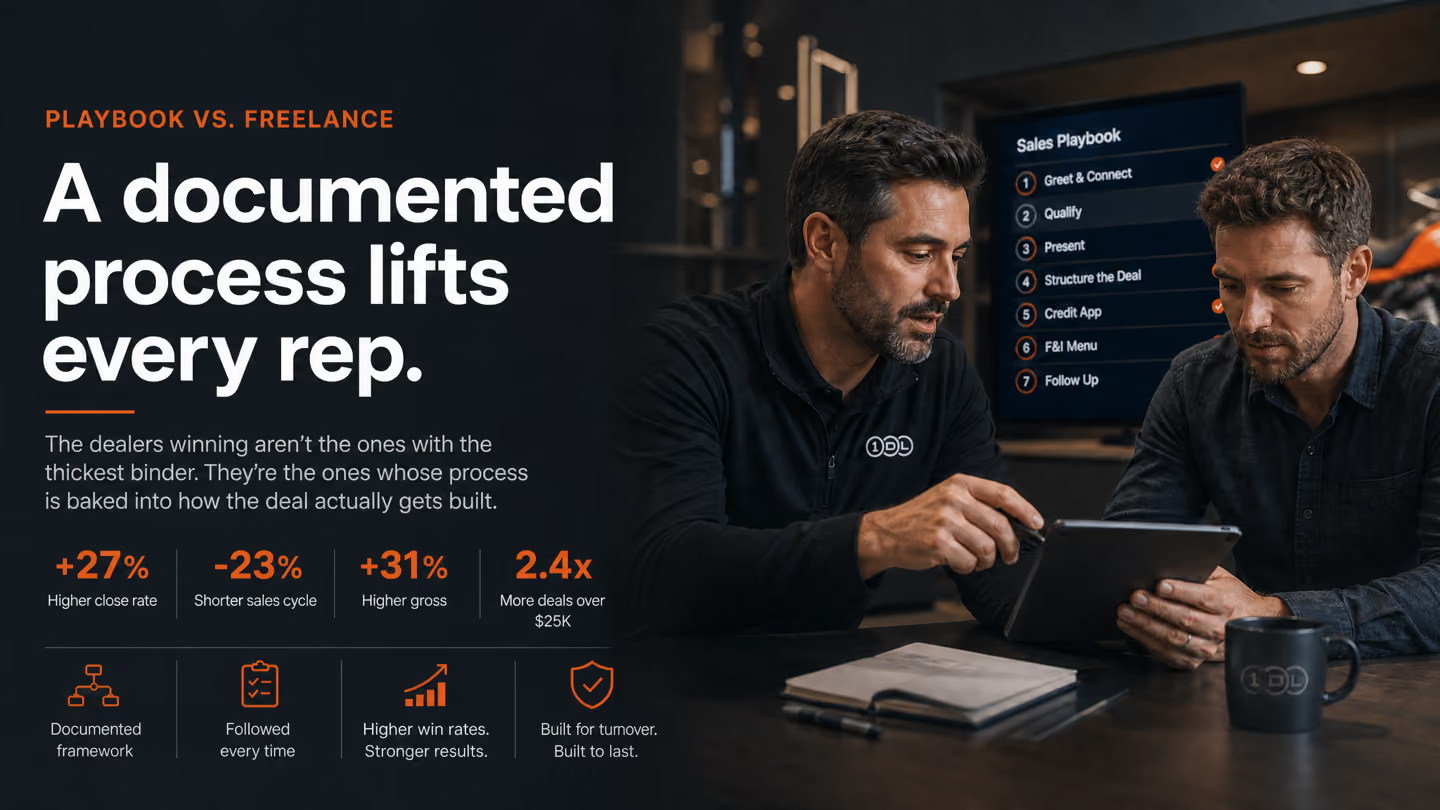
• A documented process (a framework) defines the steps to the sale, the follow-up cadence, and how the deal gets presented — while leaving the human delivery to the human.
The best stores don't script their star. They document the process — greet, qualify, present the right unit, structure the deal transparently, get to the credit app, present the menu, follow up on what didn't close — and then let each rep bring their own personality to it. The A-player barely notices, because they were already doing the steps. The average rep finally has a path. The new hire has something to follow on day three instead of shadowing until they either figure it out or quit.
In powersports, the gap is discipline — and it's measurable
Pied Piper Management found that powersports dealers scoring above 80 on lead-effectiveness sell 50% more units to the same number of leads as dealers scoring under 40 (via Powersports Business, 2025). Same leads, same market — because the high scorers respond first, consistently and professionally. As Pied Piper's Fran O'Hagan put it:
If you're dependent on one rockstar salesperson, you're in trouble when they leave. Make sure anyone with the right attitude can succeed by following the same process every time. — Fran O'Hagan, Pied Piper Management (via Powersports Business)
The turnover math nobody wants to run
Dealership turnover has risen for three straight years and now touches roughly half the workforce, with sales-consultant turnover posting its biggest jump in years (NADA 2025 Workforce Study, as reported by industry outlets). When a top producer walks, their pipeline, relationships, and undocumented process walk with them. A documented process is insurance against that — and it pays off on every hire: structured onboarding cuts new-rep ramp time by roughly 25–50% versus "shadow a senior rep for a few weeks" (Bridge Group / Salesforce).
The part most dealers get wrong: the binder
The dealer writes the playbook, trains it in a Saturday meeting, prints it — and three weeks later it's in a drawer. Meanwhile the average dealership CRM scores about 2 out of 5 on actual usage (Cox Automotive; ReWork, 2026). And usually, somewhere in there, a manager let a top performer skip a step to protect the numbers — which quietly taught the rest of the floor that the process is optional. Our culture is what we allow. A process that isn't enforced is indistinguishable from a process you never wrote.
The fix isn't more training on the binder — it's putting the process where the work actually happens. The process people actually follow is the one built into the tool they have to use to get the deal done.
So — playbook or freelance?
Both, correctly understood. Hire talent and get out of their way on delivery. But document the process — and embed it in how deals actually get built — so the other 80% of your floor performs like they've got years of instinct they haven't earned yet. The dealers pulling ahead aren't the ones with the thickest binder or the most gifted lone closer. They're the ones whose process is consistent enough to lift every rep and durable enough to survive turnover — because it lives in the workflow, not in someone's head.
About the author
Josh Harnish has spent the past six years training dealership teams, building on more than a decade of experience in automotive retail where he held a variety of leadership and management roles. He works with A2Z Sync, a leading automotive technology company, and contributes to One Dealer Lane, sharing his expertise with powersports dealerships.
Sources and further reading
- Harvard Business Review — “Companies with a Formal Sales Process Generate More Revenue” (18% revenue-growth gap; pipeline-management lift). Jan 21, 2015.
- Mike Kunkle (citing CSO Insights Sales Enablement Study) — “Your Sales Methodology Execution Gap Is Costing You Millions” (57.8% win rate at 90%+ adoption). Apr 10, 2026.
- Grape Nordic (citing CSO Insights) — formal methodology → 37.1% better win rate; process training → +21.5% results.
- SalesFit — “Sales Quota Attainment Benchmarks” (~40–50% average; 70%+ top quartile). Jan 8, 2026.
- McKinsey — “Boosting Auto Sales Productivity: A Playbook for Excellence” (56% after-hours leads; 37% respond within an hour; integration thesis). Jan 23, 2025.
- Harvard Business Review — “The Short Life of Online Sales Leads” (respond within 1 hour = 7× more likely to qualify; 23% never respond). March 2011.
- Powersports Business — “Lessons From Auto Dealers: Processes, Response Times, Invisible Opportunities” (Pied Piper: 80+ scorers sell 50% more units; “once a day, if that”; Starbucks analogy). Sept 10, 2025.
- Inc. (Nick Hedges / Steve W. Martin, Velocify research) — top reps have a systematic process; ~1 in 5 consistently beats quota. May 6, 2015.
- Onward Search — top 10–20% of sales talent drive 60–80% of revenue. Oct 2024.
- NADA 2026 (2025 data) Dealership Workforce Study — turnover up a third straight year, ~half the workforce; sales-consultant turnover +13 pts (as reported by Autopeople / Quantum5).
- Cox Automotive — CRM Usage report (industry CRM performance ~2 of 5).
- ReWork — Automotive CRM & Digital Sales guides (CRM spend vs. inconsistent use; onboarding/ramp; process-in-the-tool). 2026.
- Garage Composites / GarageCast — powersports sales-process discipline and off-season training commentary (Sam Dantzler).
Back to Top
Get more from every deal
Sign up for a free trial and start driving higher gross this month. No commitment, just results.
(877) 421-0135